
Is Ghost Inventory Haunting Your Business? How to Stop the Profit Bleed
“Ghost Inventory” is a silent operational leak that affects any business where humans and systems interact—including Manufacturing, Retail, Pharma, and E-commerce.
It occurs when inventory exists in your software but not on your floor, or vice versa. Either way, your profits are quietly bleeding away.
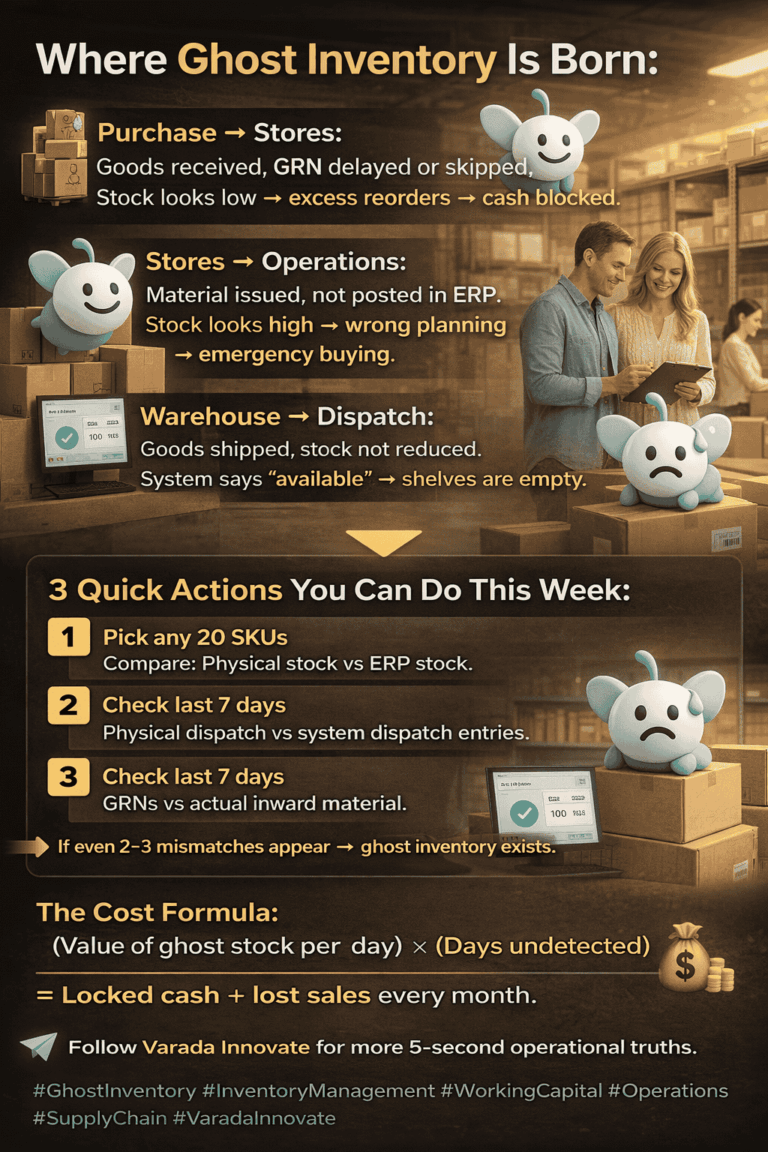
Where Ghost Inventory is Born
Ghost inventory isn’t a software glitch; it’s an operational gap in three specific areas:
Purchase → Stores: Goods are physically received, but the Goods Received Note (GRN) is delayed. Your system thinks stock is low, leading to excess reorders and blocked cash.
Stores → Operations: Material is issued for production or floor sales, but the “issue” isn’t posted in the ERP. Planning becomes guesswork, leading to expensive emergency buying.
Warehouse → Dispatch: Goods are shipped to customers, but the system stock isn’t reduced. Your system says “Available,” but your shelves are empty, leading to lost sales.
The True Cost of “Ghosts”
The math is simple but painful:
(Value of Ghost Stock per Day) × (Days Undetected) = Your Monthly Cash Loss.
A retailer in home appliances recently discovered ₹1.8 Lakh in blocked cash tied up in old, unrecorded inventory through a simple data reconciliation.
3 Quick Actions to Take This Week
You don’t need a new ERP to find these leaks. Take these three steps today:
The 20-SKU Test: Pick any 20 high-value items and compare physical floor stock against your ERP numbers.
The Dispatch Audit: Cross-check your physical dispatch logs against system invoices for the last 7 days.
The Inward Check: Verify if every physical delivery received in the last week has a corresponding GRN in the system.
If you find even 2–3 mismatches, ghost inventory is actively draining your working capital.